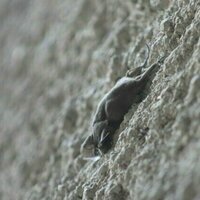


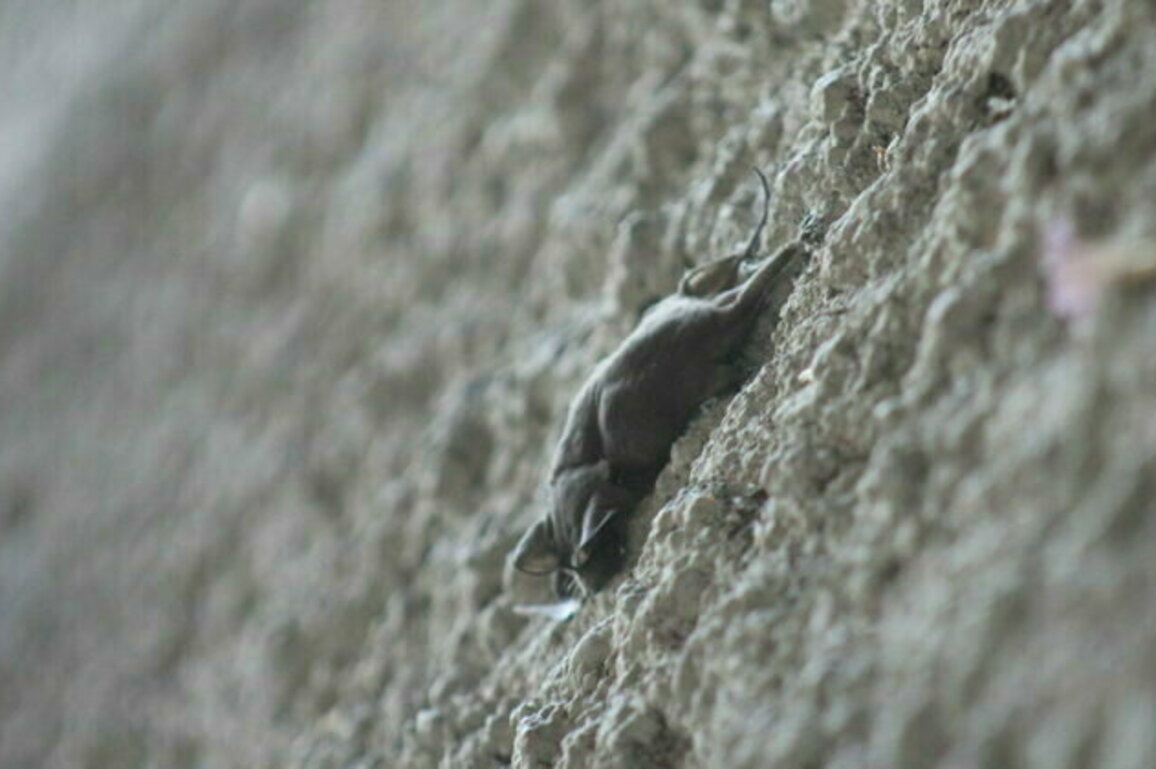
TUCSON, Ariz. (CN) - Beneath the long cast shadows of a setting summer sun, dozens of baby bats lay dead on the ground beneath the Campbell Bridge in Tucson, Arizona.
"I've never seen this before," Gena Sandoval, a University of Arizona doctoral student researching bat genetics, said as she paced up and down a bike path beneath the bridge. "I've never seen this many dead."
The temperature in Arizona's second largest city reached 108 degrees on Aug. 9 - 10 degrees higher than the 30-year average daily high for the month.
It had been 19 days since Tucson saw temperatures below 100, and it stayed that way for another two weeks. The unusually high heat - even for the desert city - and prolonged drought across the Southwest means less available water and in turn fewer aquatic insects to eat. In Arizona and New Mexico, known for their high bat species diversity, Bat Conservation International reports climate change can lead to a significant drop in bat reproduction rates.
In Tucson, those effects may already be in play.
Diversity and climate change
The Grand Canyon state is home to 29 different species of bat, tied for second place with New Mexico behind Texas. While only one species - the recently discovered Mexican long-nosed bat - is endangered, others may soon be threatened by climate change and disease.
The most well known bat in Arizona is the Mexican free-tailed bat, which along with other species of insect-eating bats make their summer homes beneath the bridges of Tucson. Under the bridges they rear their young before migrating sometimes more than 1,000 miles back to Mexico and South America for the winter. The bats sleep for most of the day, coming out at sunset by the thousands to forage for insects, each eating their body weight, albeit just a few grams, in bugs per day.
Beneath the Campbell Bridge, as many as 20,000 Mexican free-tailed bats have been recorded in one roost, though the average numbers hover closer to 10,000 at a time.

But as the sun set on Aug. 8, the bats stayed relatively inactive. Rather than thousands, only a few dozen came out at a time, and about just as many lay dead beneath them.
"It's important to distinguish between climate change effects and the effect of some hot weather," said Jonathan Derbridge, an ecologist and researcher at the University of Arizona. "But it's probably true to say we're experiencing more extended high temperatures, less rain, and certainly there's a thermal tolerance for the young bats, and beyond it at a certain level they just overheat and die."
Derbridge said prolonged drought could mean fewer insects, meaning nursing females can't produce enough milk to feed their young.
"We will stand to lose a lot of those species," he said. "Also what we call the ecosystem services they provide to humans. Which would include, in the case of the mexican free-tailed bat, a significant amount of crop pest suppression."
The U.S. Geological Survey estimates that bats save U.S. farmers at least $4 billion a year in pest control alone, not counting their impact on first ecosystems and the lumber industry, or their role as plant and crop pollinators.
Derbridge directs research at the University of Arizona's EMIGRA project, which explorers how migratory species like Mexican free-tailed bats connect human communities and provide ecosystem services.
"We don't really know a good way to manage migratory species that spend half the year in one country and part in another or several countries," he said. "We need to understand the current population ecology and biology, the economics of the value they provide humans, and what meaning these species have to people across space. When we understand these things, we'll do a better job of connecting the various components and understanding how valuable they are."
While climate change has been documented to affect migration patterns of birds and other animals, Derbridge said the effects on bats remain unclear.
"Some of this is kind of frontier stuff," he said. "Climate change is happening at a much faster pace than evolution of behavior can, perhaps."
On the edge of that frontier are student scientists, including one doctoral candidate conducting a yearlong survey of the 32 Tucson bridges that the bats call home.
A changing population
Kai Enright stood in the bone-dry Pantano Wash, shining a flashlight up at the bottom of a 22nd Street bridge. Between the long concrete slabs that make up the underbelly of the bridge, he and two colleagues counted roughly 2,500 bats.
"Honestly I'm probably underestimating," said Enright, of the university's Natural Resources, Wildlife Conservation and Management Program. "Even compared to last month this is low, just because it's so hot.
"There's been a lot of mortality," he said.

Since December, Enright has spent the first two weeks of each month counting bats under 32 Tucson bridges popular with the only mammals capable of powered flight. His goal? To compare results with a similar study conducted in 1999 and deduce whether numbers have decreased and why.
"We're kinda trying to rule out what drivers could be there for them leaving," Enright said. "If we built a bunch of parking lots and buildings where there used to be an agricultural space, and now they don't have as much food, that could be a driver for why numbers could have decreased other than heat or human activity."
Enright and his colleagues Elijah Sandridge and Gabrielle Mousseau, undergrads at Pima Community College and the University of Arizona, respectively, collect data on heat and humidity, and use high frequency recorders to track the bats' chirps to pinpoint when large numbers arrive or depart. They also track human activity via cars, bicycles and pedestrians that pass by, and collect droppings to identify potential changes in diet.
Enright said he hopes to have answers by next summer. The published data could help track and explain population changes and encourage more attention from Arizona Game and Fish, which will typically track a species only after a mass die-off.
To the bat cave!
Updated numbers could also help the city plan ahead when rebuilding or constructing new bridges. Most of the bridges built before the 1990s were built with long, parallel concrete slabs the bats love to squeeze themselves between. Newer bridges are built differently, so the city will sometimes add "bat boxes" to allow the bats to remain.
"The reason that we have bat boxes at a lot of the bridges that have been replaced in Tucson is just because the community knows and they care," Enright said. "When they have a bridge they've seen bats at, and the city announces that they're gonna replace it, they go and advocate for getting bat boxes installed."
Before the bridges were built, the bats lived mostly on cliff faces. But as humans continue to encroach on their land, they make their homes wherever they can.
"Almost everything humans do to the landscape is detrimental to every kind of wildlife," Derbridge said. "But if you happen to accidentally design (bridges) so there are little grooves, bats show up. Great, you can learn from that."
And keeping the bats around it in everyone's best interest.
"It's free pest control," Enright said "Literal tons of pest insects. It just makes a lot of things cheaper because the farmers don't have to spend as much on pest control for agriculture."
Though bats may inspire fear in many - exacerbated by horror movies and popular folklore - they present little threat to humans.
"There's no bat-to-human conflict. It's the other way around," Derbridge said. "Bats are nocturnal and don't really do anything to bother us. The chance is so low, it's not worth discussing frankly."

Enright recalled an experiment conducted British naturalist Gathorne-Hardy, who disproved the myth that bats will make nests in and become tangled in women's hair, which was started to discourage young girls from going out at night.
"They're cute. And funny," he said. They're not scary, even though everyone thinks they are."
But some may also be sick.
Hibernating illness
Since 2006, white nose syndrome has killed millions of hibernating bats in the U.S. Last year, Arizona Game and Fish detected white nose syndrome in southeastern Arizona for the first time.
First documented in Europe in 1918, the fungal disease repeatedly wakes bats up during hibernation. Like other animals, bats build up fat reserves that allow them to significantly reduce bodily function in the winter.
"The white nose causes them to burn through all that much quicker, and then there's nothing to eat," said Angie McIntire, Arizona Game and Fish statewide bat specialist.
Because white nose only infects bats while they hibernate, studying them during the winter is essential to learning more about the disease. But there lies another obstacle.
"We haven't found any of these wintering sites," McIntire said.
Because of the harsh winters and lack of resources, bats in the eastern U.S. hibernate in large groups, making them relatively easy to find. McIntire hypothesized that because of the West's milder winters, the bats aren't desperate for resources and can hibernate in smaller groups.
"It's possible that they're just so dispersed," she said. "That there's so many options for them that they don't just cluster up like they do in the East."
But Enright thinks the issue may be a bit dramatized.
"It's maybe a little more exciting to make it sound like we don't know," he said. "I think that conservation in general, especially right now, is spread pretty thin, like any kind of wildlife research. It's hard to get funding when you're not investigating something that's dire."
He also attributed a lack of general bat knowledge to a lack of general interest.
"We are kind of the next generation of bat people," he said of his contemporaries. "Most people studying bats are really really young, or they're at retirement age. Just because for a long time nobody really cared about bats. It's like the grandkids and the grandparents."
Back at the Campbell Bridge, Gena Sandoval and Addison Lander, another doctoral student studying bats at the university's Enard Lab, carried two fallen but uninjured juveniles to a high point beneath the bridge hoping that their mothers will later rescue them. Soon after, they watched another fallen juvenile crawling unaided to that same spot, giving the students some hope.
"You're gonna make it," Sandoval whispered to the baby bats, each weighing about a third of an ounce. "I know you are."
Source: Courthouse News Service