


OMAHA, Neb. (CN) - Someone being sentenced on a charge of motor vehicle homicide while drunk driving might normally be a sad but routine affair. Most such cases, while profound, don't attract the attention of two states' congressional delegations and the president of the United States.
But the one heard in Courtroom 409 at the Douglas County Courthouse Monday had, mostly because the perpetrator was in the country unlawfully and fled the country days after causing the death of a woman who had just graduated college with a 4.0 GPA.
District Court Judge James M. Masteller sentenced Eswin Mejia to up to 22 years in prison in connection with the 2016 car-crash death of Sarah Root. But with time served and Nebraska sentencing law, he may end up serving closer to 10 years.
It was the maximum sentence Masteller could hand down on the two charges: motor vehicle homicide and failure to appear while on bail - both felonies. And for that, her family was pleased with the outcome.
"It doesn't bring her back, but I am really, really happy," Michelle Root, Sarah Root's mother, told reporters after the sentencing was over.
Her father, Scott Root, wouldn't say he was happy. "But it's something we didn't have a year ago. That's something."
In 2016, Mejia, then 19, was drag racing early on a Sunday morning on L Street in Omaha when he plowed into the back of a 2002 Oldsmobile Bravada driven by Root, 21, at the intersection with 33rd Street, killing her.
Root, of Council Bluffs, Iowa, just across the Missouri River, was declared brain dead on Feb. 1, 2016. She remained alive for four days as her organs were harvested before she died on Feb. 4. Mejia's blood alcohol level was nearly three times the legal limit.
Driving his employer's pickup truck, he hit her SUV with such force he pushed it 306 feet. Investigators found he hit her at 71 mph on a stretch of street where the speed limit is 35 mph.
Omaha police arrested Mejia, but after his release after posting 10% of a $50,000 bail, he absconded to his native Honduras, where he remained for nine years, untouched by U.S. authorities.
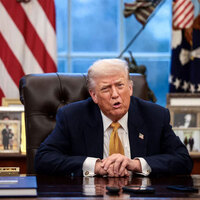
The case became a cause celebre in conservative circles. Donald Trump made it an issue in his 2016 campaign.
Mejia was an immigrant without legal status, apprehended by federal authorities in 2013 at age 16 in Arizona as an unaccompanied minor and sent to Omaha to live with a brother.
After the crash, Immigration and Customs Enforcement did not detain Mejia despite a call from an Omaha police accident investigator, an investigation by the Omaha World-Herald found. A spokesperson for ICE told the paper that Mejia "did not meet ICE's enforcement priorities."
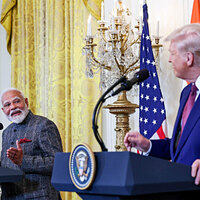
In 2025, after returning to office for his second term, Trump signed the Laken Riley Act, which incorporated "Sarah's Law," components advocated by Nebraska and Iowa congresspeople that required ICE to detain those not legally in the U.S. charged with injuring or killing someone.
Mejia was still in Honduras. But not for long. In March 2025, he was successfully extradited and returned to the United States.
After initially pleading not guilty, he changed his pleas: no contest to the charge of motor vehicle homicide while driving intoxicated and guilty on failure to appear. His case did not go to trial.
Mejia's attorney filed a memorandum Friday that said, after fleeing the United States, he settled down in Honduras with a wife. They had two children. He now accepts responsibility for his actions in 2016 and is prepared to accept a prison sentence.
"His father abandoned the family after Eswin's birth, and as a result, he never had any contact with his father," public defender Thomas C. Riley said in the memorandum. "Eswin has a close relationship with his wife's family and describes his father-in -law as 'the closest thing to a father to me.'"
In court Monday, Riley read a statement from Mejia, whose English is rudimentary.
"I apologize to Ms. Root's loved ones and friends for their loss," Riley said, reading Mejia's translated statement. "Now, I have children of my own and can grasp how a parent feels as a result of their child's death, especially when it is caused by another person's reckless conduct."
Both of Root's parents made statements before Masteller passed sentence. Wearing a gray winter jacket over a T-shirt emblazoned with her daughter's image, she talked about her daughter's selflessness. As an organ donor, she helped others to live.
"You never really knew when Sarah was upset because she never let that part of her show," Sarah Root told the court as loved ones, who filled almost every seat of the gallery, sniffled and wiped their faces with tissues. "Sarah had so much life to live, and she was cheated out of that."
"I have daily breakdowns, panic attacks. I struggle to get going. I get nervous at a stoplight," she said. "This tragedy has taken a toll on me mentally and physically."
Her daughter comes to her in dreams. "She has asked me to tell Eswin Mejia that she forgives him. I do not, but my daughter does, and this is about her and not me."
Scott Root, wearing a short-sleeved plaid shirt, was more succinct in his comments. Mejia wouldn't be back in Omaha to face justice if he hadn't been made to, he said.
"Mejia is sorry he got caught," he said. "He went on with his life after he stole Sarah's."
Masteller sentenced Mejia to 19 to 20 years for the motor vehicle homicide charge and one to two years for the fleeing charge. He credited him for 345 days of time already served.
News of the made it to the Roots' political supporters. In the state capital of Lincoln, GOP Governor Jim Pillen put out a statement. "Sarah Root's life tragically ended way too early - and our hearts continue to break for her loved ones."
Back at the Douglas County courthouse, as Michelle Root spoke to reporters, she took a video call from Iowa Senator Joni Ernst, also a Republican. "I admire your courage and your advocacy," Ernst told her.
Said Michelle Root: "She has never let up, even when I wanted to let up."
Scott Root thanked the efforts of President Trump, Homeland Security Secretary Kristi Noem and Trump administration officials. As he had before Congress a decade ago, he mentioned immigrants in his own family and also thanked the government of Honduras for helping to bring Mejia to justice.
Source: Courthouse News Service